About CYCLOS
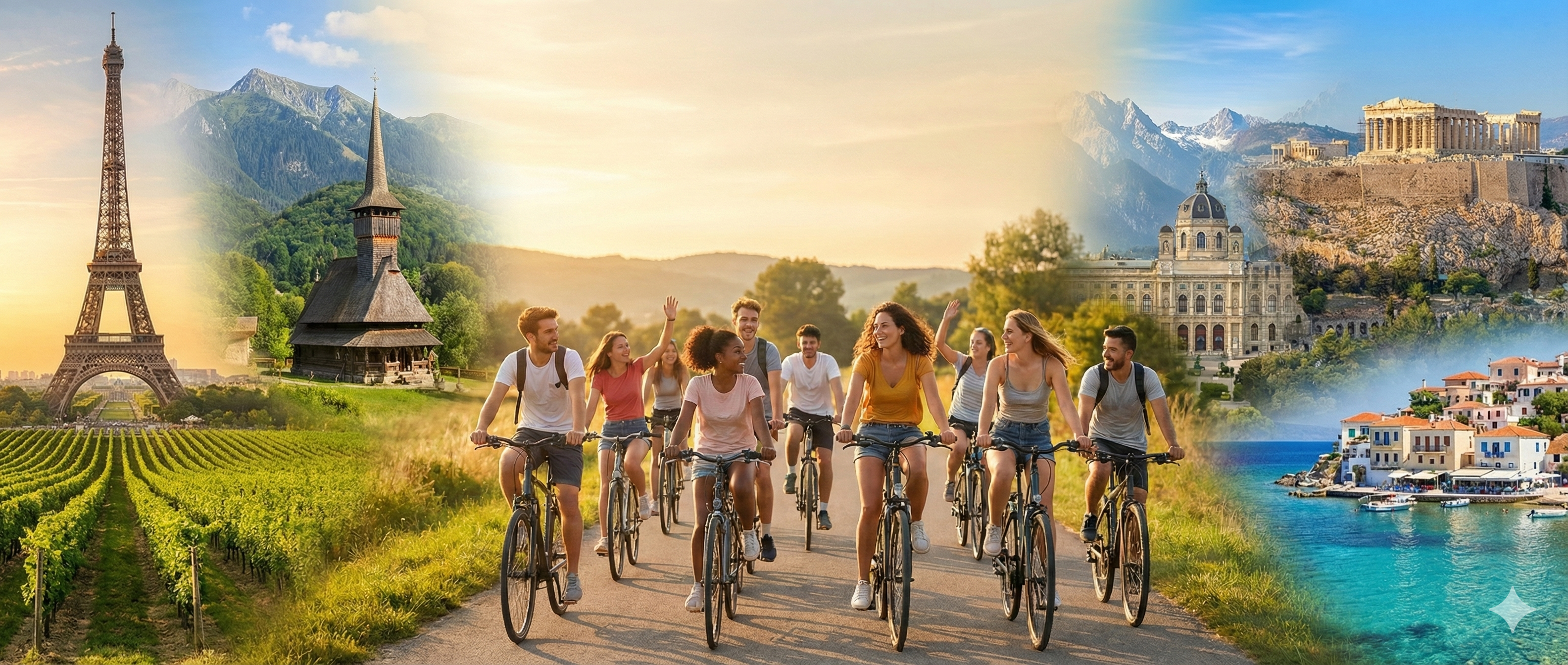
CYCLOS is an ERASMUS+ KA220-YOU Cooperation Partnership project that brings together organizations from France, Romania, Austria, and Greece to promote the social inclusion of disadvantaged young people through cycling.
Project Background
CYCLOS (Youth Cycling for Inclusion) is an ERASMUS+ KA220-YOU Cooperation Partnership that brings together four organizations from France, Romania, Austria, and Greece. The project addresses a critical challenge: many disadvantaged young people face barriers to employment and social integration, with mobility being a significant obstacle.
By focusing on cycling as a tool for inclusion, CYCLOS aims to help these young people overcome mobility barriers, develop practical skills, build confidence, and become more autonomous. At the same time, the project promotes environmental awareness and sustainable transportation practices.
The project will develop educational materials, organize practical cycling sessions, create a digital learning platform, and provide training for youth workers across the partner countries.
Objectives
Promote the social inclusion of disadvantaged young people through cycling
Raise environmental awareness and encourage greener mobility choices
Help youth become more autonomous and independent in their daily lives
Boost skills, self-confidence, and employability
Equip youth workers with tools to organize inclusive cycling sessions
Develop a digital platform for learning and awareness
Project Timeline
Project Start
September 2025
30 months
of collaborative work
Project End
February 2028
Target Audience
Disadvantaged youth facing barriers to employment
Young people with disabilities, migrant backgrounds, or from low socioeconomic situations
Youth workers and professionals
Professionals organizing activities for disadvantaged youth
Local governments and NGOs
Organizations working on youth inclusion and sustainable mobility
Funded by the European Union
CYCLOS is a Cooperation Partnership funded under the ERASMUS+ Programme (KA220-YOU) with a total budget of €250,000. The project is coordinated by FLVS (France) in partnership with organizations from Romania, Austria, and Greece.